

DBT Skills Training Module: Emotion Regulation
This Skill is OPPOSITE TO EMOTION ACTION.
Intentionally do something different from what you may feel naturally inclined to do in certain situations in order to create new neural networks and not reinforce the same thinking/behaviors/outcomes.
This is a skill that requires discernment to know when it’s appropriate to practice. For instance, you wouldn’t practice this with someone being abusive to you. In those cases, your emotions are signals you must heed to keep yourself safe.
THE PURPOSE of this skill is to engage in thinking/behaviors that are different from the emotion you feel at the time in order to SHIFT THAT EMOTION. It helps you reinforce you are capable of managing your emotions and being in control of your behaviors.
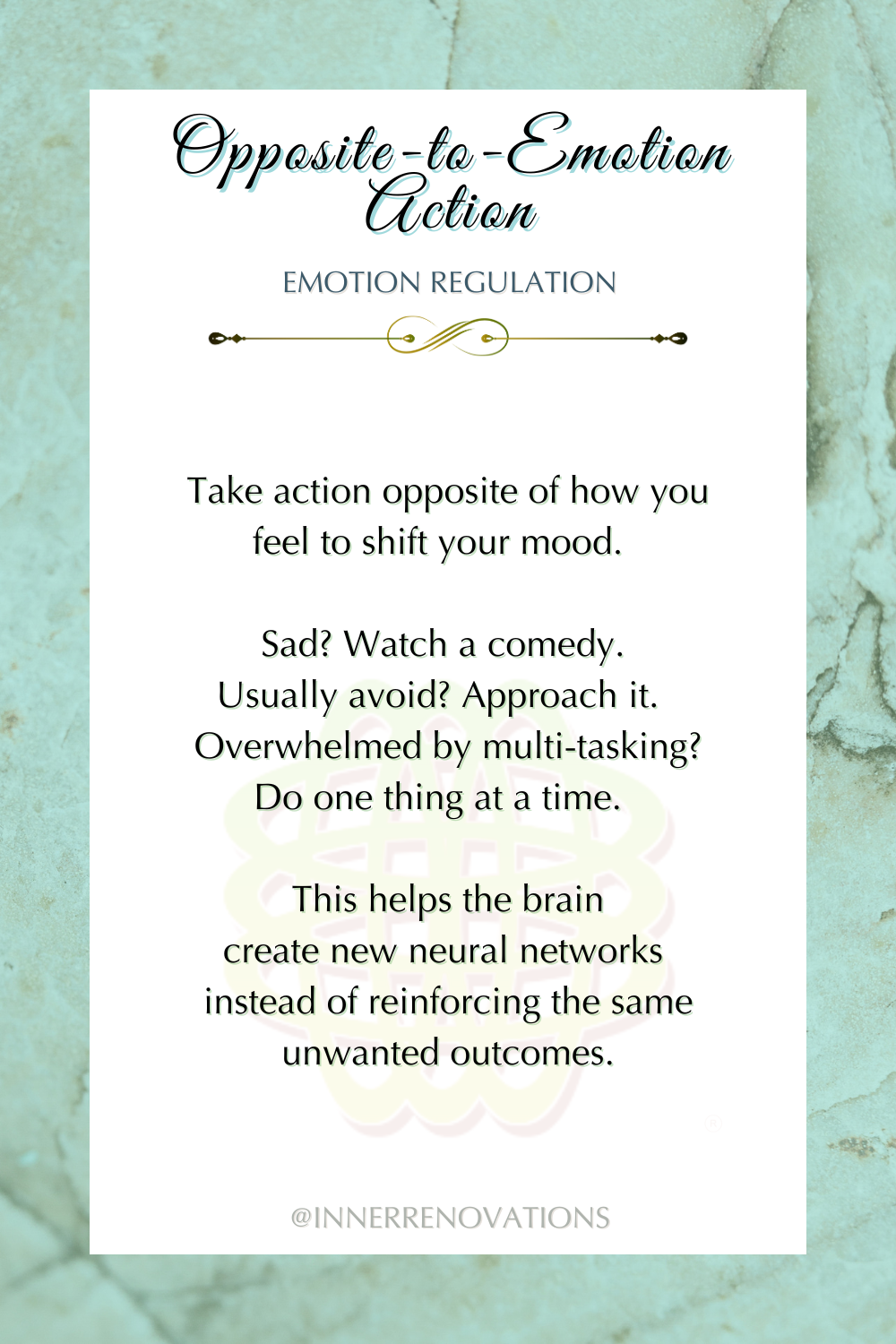
Examples are:
If feeling FEAR – do what you are afraid of doing over and over again (ultimately becoming less bothered by it).
When OVERWHELMED by many or big things, make a list of baby steps or tasks you can do to shrink the matter down to a more manageable size and just do the first thing on the list.
* When feeling GUILT OR SHAME, just say sorry if it’s something you’re actually accountable for. If the shame is unjustified and you have not actually harmed anyone, approach the thing/situation you feel guilty about and give yourself permission to experience it without imposing shame on yourself. Replace shame with giving yourself permission to be human, exist, make mistakes, have successes, and other experiences without judgment from yourself or others.
When feeling SADNESS or DEPRESSION, to practice Opposite-to-Emotion action, GET ACTIVE and APPROACH things instead of isolating or avoiding them. Do things that make you feel competent and self-confident.
When feeling ANGER, gently detach from the person/situation you are angry with. Rather than dwelling on thoughts of the matter or moving towards that person in an attacking manner, shift your attention onto things that give you a sense of peace and are more worthy of your time in that moment.
Advanced practice of this skill when angry at someone is to actually do something nice for them and show them sympathy or empathy to shift away from angry feelings. Releasing anger towards others can help restore personal balance and improve mental health.
APPLY THE SKILL:
In what ways can you imagine practicing Opposite-to-Emotion action the next time you become upset with someone you care about?
Reference: Linehan, M.M. (2015). DBT Skills Training Manual (2nd ed.). Guilford Press.
 Inner Renovations Toolbox