
DBT Skills Training Module: Emotion Regulation
HOW TO REDUCE THE RISK OF PAINFUL EMOTIONS CONTROLLING YOU:
Healthy habits are an important part of managing mood swings, depression, anger, irritability, and other emotions that cause distress. Use the following acronym to Reduce Emotional Vulnerability by remembering to stay S.T.R.O.N.G. Work on these skills, monitor your progress, and master them one by one.
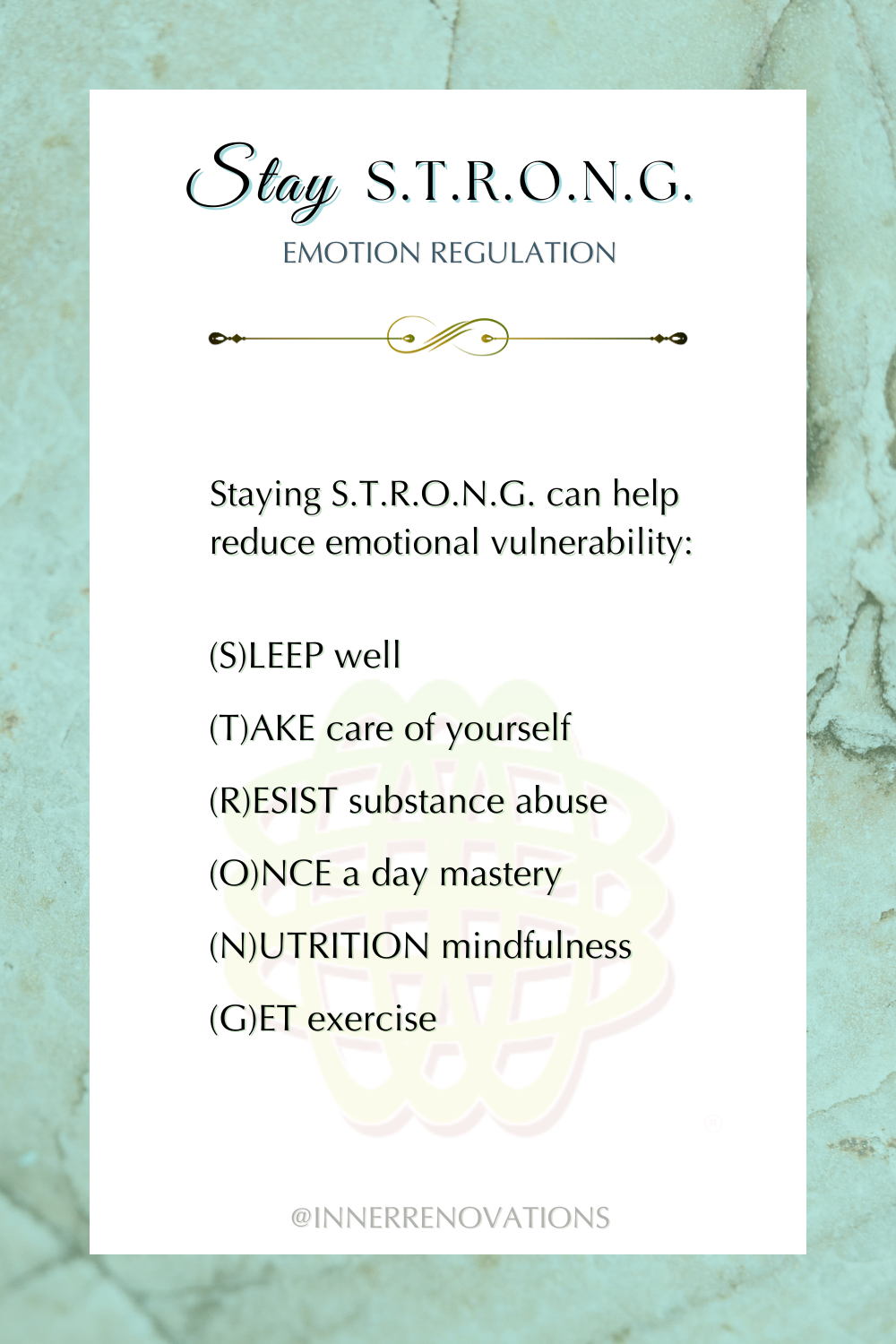
S.T.R.O.N.G.
S – SLEEP WELL
Get as much sleep as you need – not too much and not too little. Good sleep hygiene is an important part of positive mental health. Develop a healthy routine to wind down before bed, such as: shutting down devices a couple of hours beforehand, avoiding caffeine, having dinner at a decent time, doing some stretching, having a moment of mindfulness, reading, and making sure your attire and bed are comfortable to support a good night’s sleep. Experiment with what works for you and keeps you well.
T – TAKE MEDS AS PRESCRIBED / TAKE CARE OF YOURSELF
If you have a prescription, follow your doctor’s recommendations and take them properly. Talk to your provider about medication changes when needed. When you are not feeling well, take good care of yourself.
R – RESIST DRINKING/DRUGGING
When on a mental health and wellness journey, recreational drugs and alcohol are counterproductive to your recovery efforts. Resist substance use and focus on nourishing your body with nutrients that keep you well.
O – ONCE A DAY MASTERY
Do at least one thing each day that makes you feel like you’re mastering your world and gives you a feeling of being in control in a healthy way. The goal can be anything from successfully taking a shower when you didn’t feel like it, to challenging yourself by trying a new recipe. Make sure your goal is one thing for the day (big or small) you are SURE you can get accomplished.
N – NUTRITION MINDFULNESS
Be mindful of maintaining a diet that supports your mental health, physical wellness, and reduces emotional vulnerability. When you are well nourished, your brain and body function better together as you keep your blood sugar balanced and organs getting what they need. Don’t make decisions about food based on your emotional state; eat based on your nutritional needs.
G – GET EXERCISE
Get moving! Research shows that exercise helps people improve their mood by increasing neurotransmitters in the brain linked to happiness and sense of wellbeing. It only takes 20 minutes a day for healthy results.
APPLY THE SKILL:
Which of these S.T.R.O.N.G. skills do you already practice well; and where do you see you could use improvement. What barriers come up for you when you think about applying this skill and what are you solutions to overcome them?
Reference: Linehan, M.M. (2015). DBT Skills Training Manual (2nd ed.). Guilford Press.
 Inner Renovations Toolbox